Educational toys do not equal toys with fancy labels. Truly valuable educational toys target children’s developmental needs, helping them build motor skills, concentration, logical thinking and cooperation ability through play. Wooden puzzles serve as a classic example of such purpose-driven playthings. This guide shares how to pick suitable educational toys according to kids’ age, core abilities you want to develop, real-life usage scenarios, and critical safety standards.
Match Toys to Age & Core Developmental Goals
Children at different stages have very different physical and cognitive capacities. Setting clear ability goals before buying helps you avoid mindless shopping based only on appearance.
Ages 1–3: Fine Motor Skills & Basic Cognition
Toddlers are rapidly developing hand-eye coordination and basic grasping movements. They tend to grab, bite and throw toys, so safety comes first.
Target abilities: fine motor skill practice, shape-object recognition, hand-eye coordination.
Recommended toy types: large-piece peg puzzles, shape-matching wooden puzzles, simple 4-12 piece jigsaws.
Key requirements: extra large choking proof pieces, fully rounded polished edges, non-toxic water-based paint and crack-resistant solid wood. Small size parts must be avoided. These toys let toddlers practice picking up, placing and fitting blocks while learning colors, animals and everyday objects.
Ages 3–6: Concentration, Patience & Independent Problem–Solving
Preschoolers have longer attention spans and improved hands-on control. This period is perfect to train sustained focus and frustration tolerance. Toys work well both for quiet individual play and kindergarten group activities.
Target abilities: sustained concentration, pattern recognition, logical thinking, basic frustration resilience.
Recommended toy types: 16-48-piece themed jigsaw puzzles covering dinosaurs, vehicles, plants and alphabet themes.
Key requirements: moderately-sized pieces, tight stitching, scratch-resistant surfaces and clear high-definition printing. Appropriate difficulty helps kids stay focused, work through small challenges independently and build confidence upon finishing tasks.
Ages 6–12: Spatial Logic & Parent–Child / Peer Cooperation
School-age kids can handle multi-step reasoning. Toys at this stage can shift toward complex challenges and social interaction, drawing children away from screen time. When played in groups or with family, children learn to discuss ideas, divide tasks and solve problems together, which is a great practice for cooperation skills.
Target abilities: spatial imagination, logical analysis, sustained deep focus, cooperation and communication.
Recommended toy types: 60-100-piece panoramic puzzles, map puzzles and multi-player scene-building sets.
Key requirements: moderate piece size with clear, continuous scene design; precise cutting so pieces fit tightly; rich detail to inspire observation. Choose puzzles marked with non‑toxic, kid‑safe paint and solid wood construction. Larger, panoramic themes work best for multiple players, leaving enough room for kids to split the work and talk through their ideas. Avoid overly busy layouts that cause frustration.
Gift–oriented purchases
For birthday or holiday gifts, select well-finished products with premium materials and exquisite packaging. They balance educational functions with ornamental value and are fit for both playing and room display.
Common Categories of Skill–Building Educational Toys: Pros & Cons
Understanding strengths and limits of typical toy types prevents mismatched purchases.
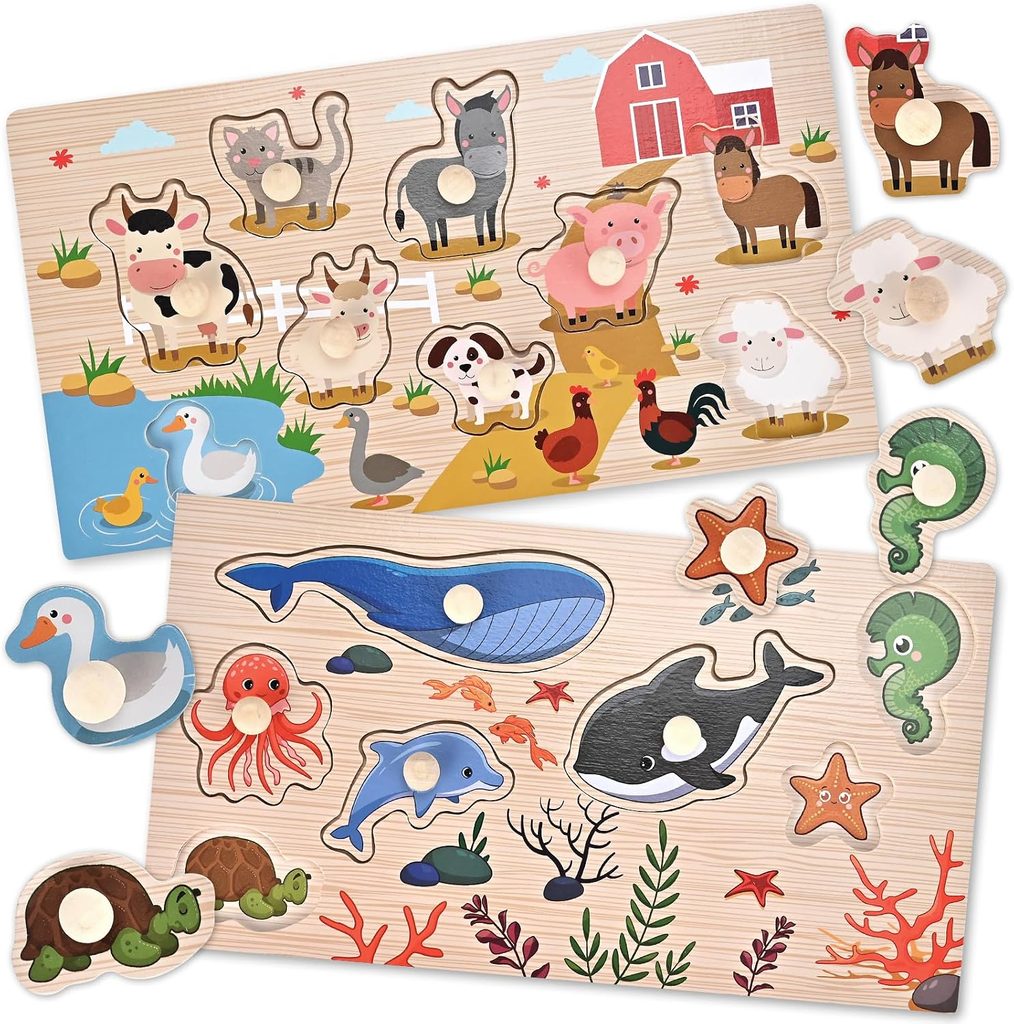
1. Pegged / knob puzzles
Pros: Easy for little hands to lift; excellent for early fine-motor training.
Cons: Limited play modes; mainly for low-age cognitive practice with a short play cycle.
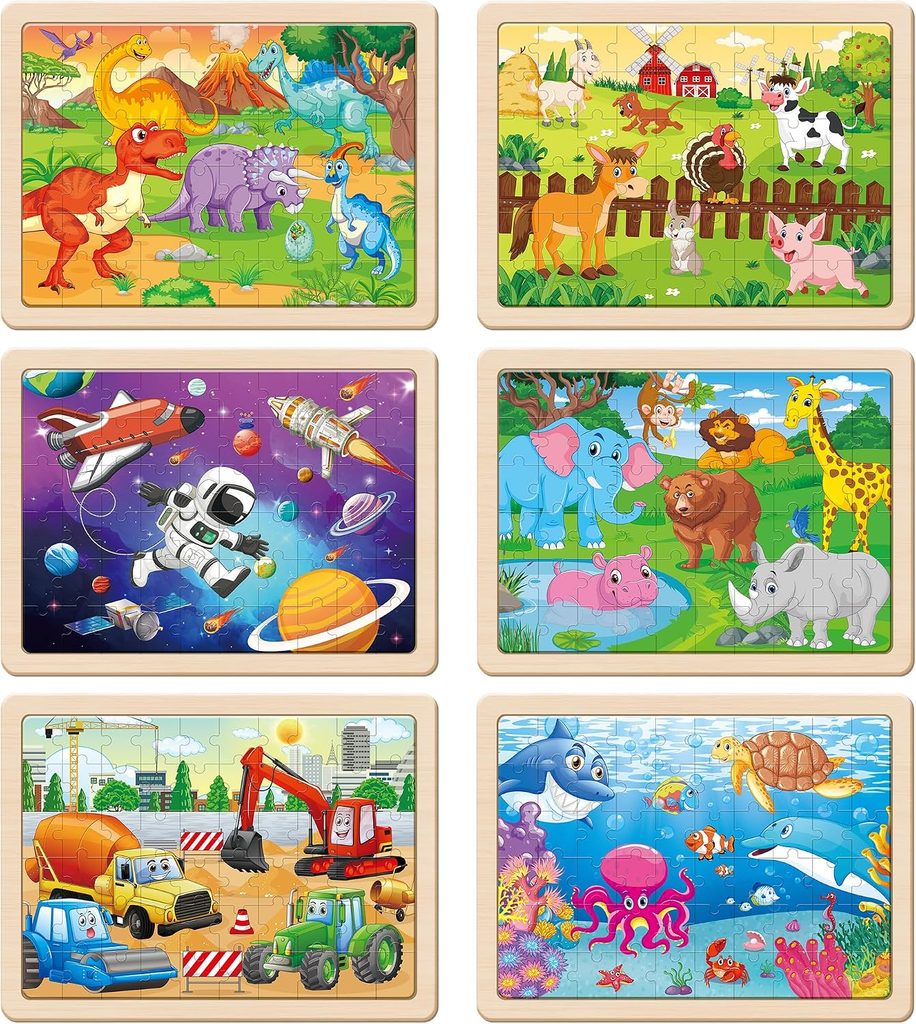
2. Interlocking jigsaw puzzles
Pros: Wide theme selection, progressive difficulty levels; highly effective for concentration and logic training.
Cons: Low-end versions may suffer loose connections, burrs and fading prints.
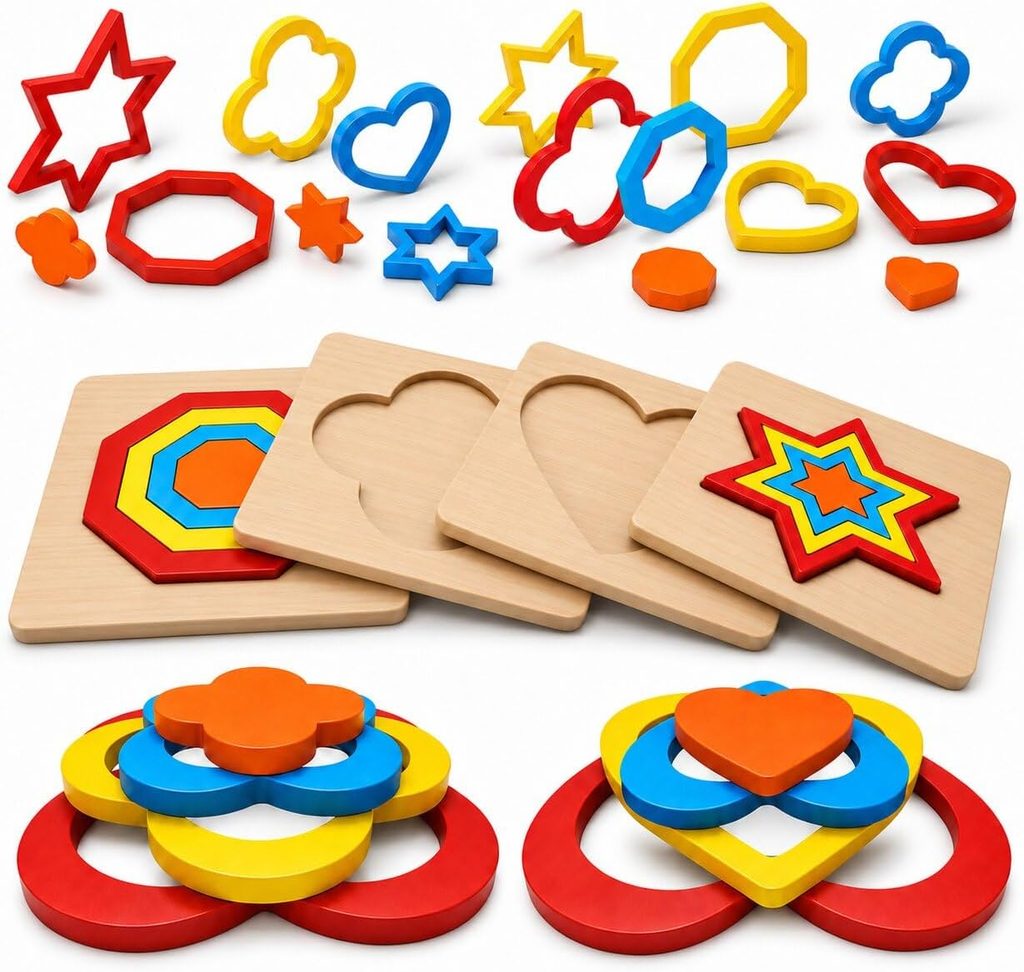
3. Shape–matching puzzles
Pros: Simple mechanics to build geometry awareness and spatial matching ability.
Cons: Difficulty cannot scale high; best for introductory early-education.
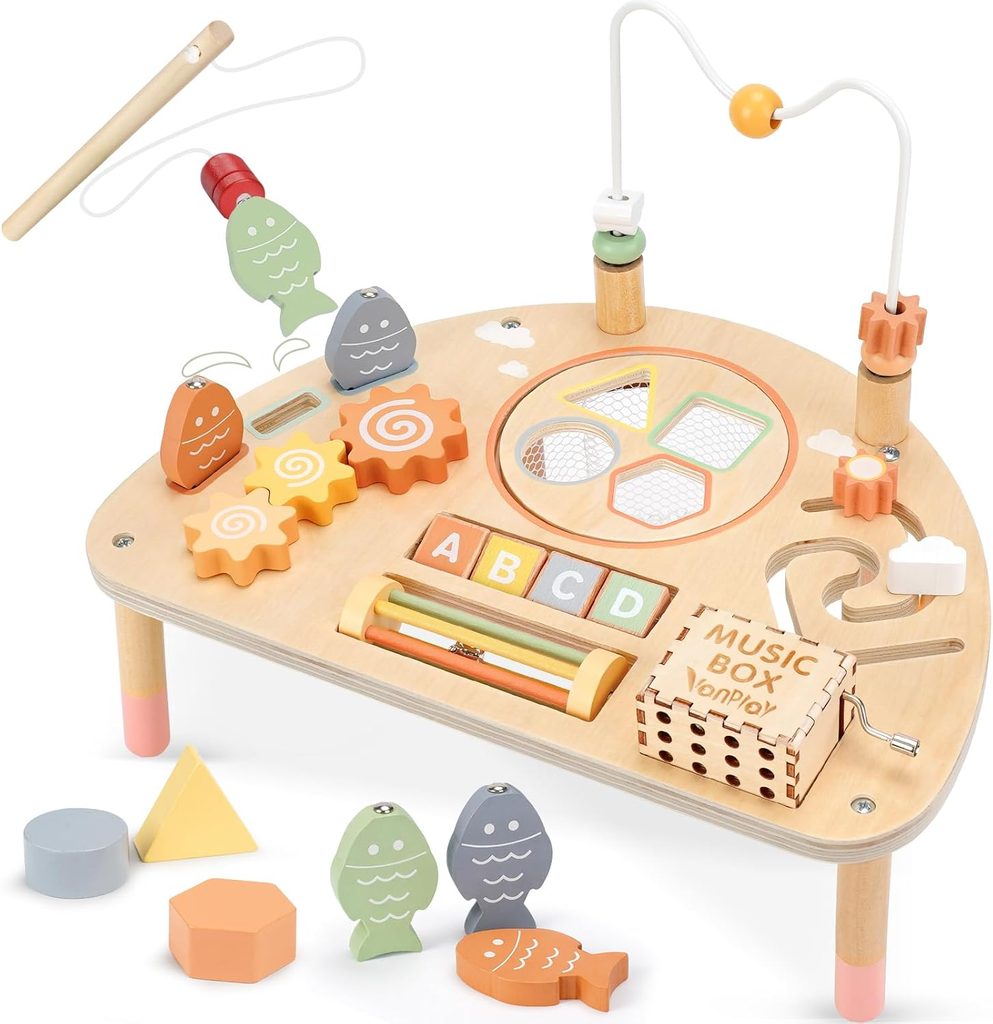
4. Multi–functional combined toys (double–sided puzzles, play–and–learn boards)
Pros: Integrate puzzle play, letter-number learning and drawing; high cost-efficiency supporting long-term growth.
Cons: Higher unit price; reliable brand quality control is essential.
Non–negotiable Buying Key Factors
1. Safe material
Choose high-density natural solid wood such as basswood or pine. Avoid recycled wood and cheap plywood prone to delamination and strange chemical smells. For surface treatment, only pick food-grade water-based paint: non-toxic, odor-free and wear-resistant. Oily paint with strong odors may contain excess formaldehyde or heavy metals harmful to children’s skin and respiratory systems.
2. Workmanship safety
360-degree full rounded polishing with zero sharp corners and wood splinters. For children under three, all components must meet anti-choking standards. Precise cutting brings tight fitting and stable play experience. Blurry, faded printing will mislead children’s color and pattern cognition.
3. Difficulty matching ability level
Over-challenging toys trigger frustration and make kids lose interest. Over-simple ones fail to offer developmental benefits. Always align difficulty to your child’s real ability rather than their chronological age.
Typical Buying Mistakes to Avoid
• Choosing purely by cute appearances while ignoring material safety. Many attractively-styled cheap toys hide sharp edges and chemical risks.
• Chasing excessive difficulty. Young children will give up repeatedly if tasks go far beyond their current capacity.
• Overlooking craftsmanship details. Unpolished burrs may scratch hands; low-grade wood dust may irritate breathing.
• Buying thin, fragile low-density products. They crack easily after drops and have short service life.
Final Takeaway
Good educational toys do not teach passively. They invite kids to touch, try, fail and retry. Prioritize safety standards, age-appropriate difficulty and clear developmental purposes, instead of low price or fancy packaging.
For toddlers, focus on fine-motor and sensory practice. For preschool-aged children, prioritize concentration and independent problem-solving. For school-age kids, select toys that encourage logical reasoning as well as parent-child or peer cooperation. Quality educational play keeps children engaged offline, building core life skills from early childhood.
FAQs
Q1: Are wooden educational toys better than paper-made alternatives?
A: Well-made wooden toys are thicker, tear-proof and drop-resistant. With non-toxic finishing and smooth polishing, they avoid choking hazards from paper scraps and support repeated long-time play.
Q2: How to clean wooden skill-building toys?
A: Wipe surfaces using a damp soft cloth. Do not soak toys in water or leave them under direct strong sunlight. Store in dry, well-ventilated space to prevent mildew.
Q3: Can educational toys be used in kindergarten classroom settings?
A: Yes. Safe, non-toxic wooden toys fit classroom requirements. They are widely used for group activities, fine-motor drills and concentration training.
Q4: Can toys really improve children’s cooperation skills?
A: Yes, but only when designed for shared play. Complex puzzles and collaborative sets require kids to observe, communicate and assign tasks together, which naturally builds cooperation competence.