Wooden puzzles are one of the most timeless, educational, and kid-safe toys for early childhood development. Unlike flimsy paper puzzles that tear, bend, or fade quickly, high-quality wooden puzzles offer durable construction, smooth edges, vibrant non-toxic prints, and long-lasting play value for toddlers, preschoolers, and elementary-aged children.
Whether you are shopping for daily educational play, fine motor skill training, quiet time activities, birthday gifts, or classroom teaching tools, choosing the right wooden puzzle makes a huge difference in safety, play experience, and developmental benefits. This guide breaks down the best wooden puzzles for kids based on age groups, usage scenarios, puzzle types, quality standards, and common buying mistakes to help you pick the perfect option.
Table of Contents
How to Choose Wooden Puzzles Based on Kids & Usage ScenariosCommon Types of Wooden Puzzles for Kids (Pros & Cons)Key Factors to Buy the Best Wooden Puzzles for KidsCommon Mistakes When Buying Kids Wooden PuzzlesFinal VerdictFAQs About Kids Wooden Puzzles
How to Choose Wooden Puzzles Based on Kids & Usage Scenarios
The biggest mistake most parents make is buying puzzles only by appearance. Different ages and usage environments require completely different wooden puzzle designs, piece sizes, and difficulty levels. Below is a scenario-based selection guide for every common use case.
1. Toddlers Aged 1–3 | Daily Home Early Education
Toddlers in this stage are in the rapid growth period of hand-eye coordination and cognitive recognition. They tend to grab, bite, and throw toys randomly.
For home daily play, you need extra thick large-piece wooden puzzles. Small pieces pose choking hazards, while thin wooden boards easily crack. Ideal options include single-shape matching puzzles, animal recognition puzzles, and simple 4–12 piece jigsaw puzzles. These puzzles help toddlers recognize animals, numbers, colors, and daily objects while training basic grabbing and placing abilities.
Key features for home toddler use: oversized pieces, rounded full-sand edges, non-toxic water-based paint, and anti-crack solid wood boards.

2. Preschoolers Aged 3–6 | Kindergarten & Skill Training
Preschool kids have stronger concentration and better hands-on abilities. Wooden puzzles at this stage focus on logic thinking, patience training, and pattern recognition.
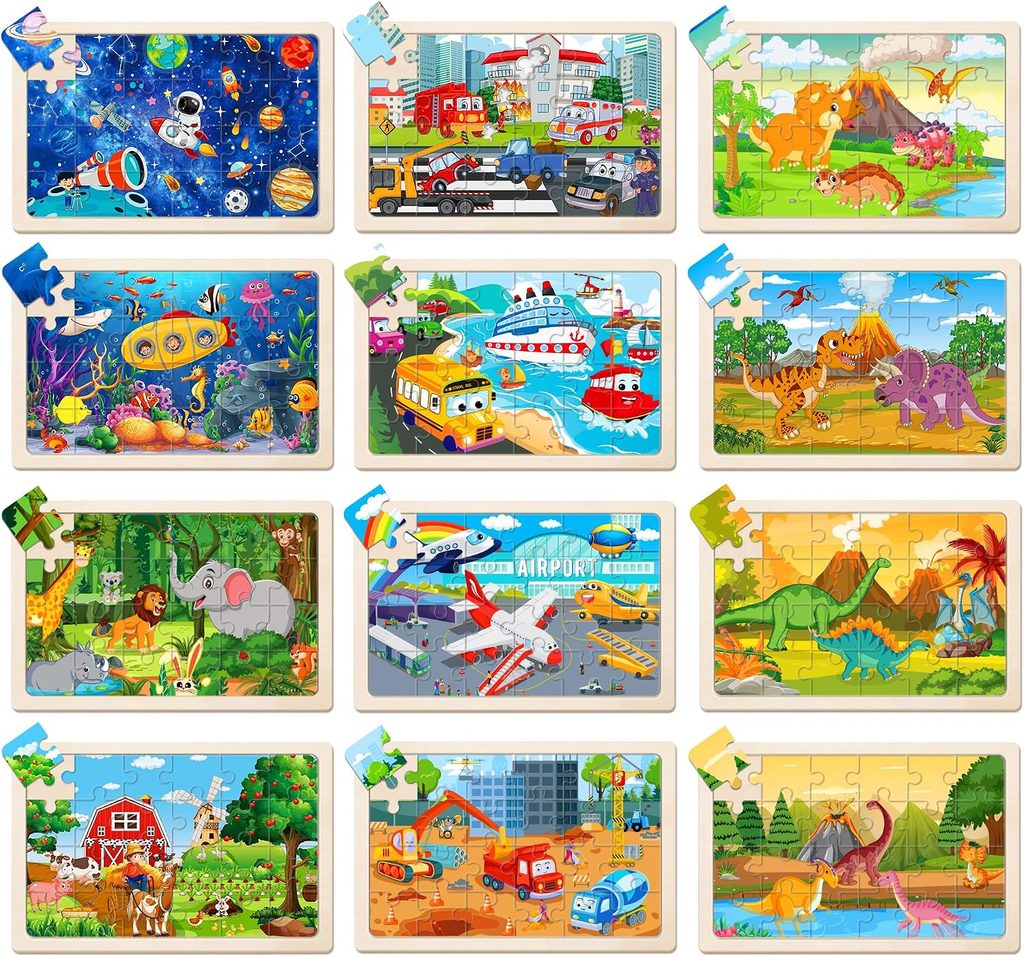
Kindergartens commonly use 16–48 piece wooden puzzles, including traffic tools, plants, dinosaurs, cartoon characters, and alphabet counting puzzles. These puzzles support group classroom activities and individual quiet-time training. Moderate difficulty helps kids cultivate focus, improve problem-solving skills, and build confidence after completing challenges independently.
Key features for preschool use: moderate piece size, tight stitching, clear printing, scratch-resistant surface, and stackable storage design.
3. Kids Aged 6–12 | Advanced Challenge & Intellectual Development
School-age children need higher-difficulty wooden puzzles to exercise spatial imagination and logical analysis. For after-school leisure and intellectual improvement, 60–100 piece panoramic wooden puzzles, map puzzles, and creative scene puzzles are the best choices.
These complex puzzles require step-by-step reasoning, overall observation, and patience, effectively helping kids stay away from electronic devices, improve concentration, and develop systematic thinking habits. They are also perfect parent-child interactive toys for family leisure time.

4. Gift & Festival Scenarios | Premium Exquisite Wooden Puzzles
If you need wooden puzzles for birthday gifts, holiday presents, or kindergarten prize gifts, priority should be given to high-definition printing, polished premium wood, and exquisite packaging.
Gift-style wooden puzzles feature vivid color restoration, seamless splicing, smooth touch feeling, and durable drop-resistant performance. They balance education and ornamental value, suitable for both playing and room decoration.
Common Types of Wooden Puzzles for Kids (Pros & Cons)
Different wooden puzzle types serve different educational purposes and age groups. Understanding their differences helps you avoid unsuitable purchases.
1. Pegged Wooden Puzzles
Pegged puzzles come with small wooden handles on each piece. They are specially designed for 1–3 year-old toddlers who cannot precisely grab flat puzzle pieces.
Pros: Extremely friendly for little hands, easy to pick up, effectively train muscle control and hand-eye coordination.
Cons: Single play mode, only suitable for low-age cognition training, short-term play cycle.
2. Jigsaw Wooden Puzzles
The most mainstream wooden puzzle type, with interlocking irregular pieces ranging from 4 pieces to 100+ pieces. Covering animals, scenery, dinosaurs, letters, numbers, and custom cartoon patterns.
Pros: Rich themes, progressive difficulty, strong playability, excellent for logic and concentration training.
Cons: Low-quality products may have loose stitching, burr edges, or color fading issues.
3. Shape Matching Wooden Puzzles
With hollow groove bases and corresponding shape blocks, including geometric shapes, animal outlines, and daily item matching.
Pros: Help kids recognize geometry, cultivate shape cognition and spatial matching ability, simple and educational.
Cons: Limited difficulty improvement, more suitable for introductory early education.
4. Double-Sided & Multi-Functional Wooden Puzzles
Integrate puzzles, alphabet learning, number counting, pattern matching, and drawing functions in one set.
Pros: Multi-purpose design, high cost performance, multiple educational functions to support long-term learning growth.
Cons: Higher price than single-function puzzles, need formal brand quality control.
Key Factors to Buy the Best Wooden Puzzles for Kids
1. Wood Material & Durability
Material determines safety and service life. Premium kids wooden puzzles use natural solid wood, basswood, or pine wood with high density, drop resistance, crack resistance, and no peculiar smell.
Inferior puzzles use recycled wood or plywood, which easily delaminate, deform, and produce pungent odors after long-term play. High-quality wood ensures smooth cutting and long-term repeated use.
2. Surface Paint & Safety Standard
Kids often touch and even bite puzzle pieces. Qualified wooden puzzles adopt food-grade water-based paint, which is non-toxic, odorless, wear-resistant, and does not fade.
Never buy puzzles with oily paint, strong chemical smell, or rough printed layers. They may contain excessive formaldehyde and heavy metals, harming kids’ respiratory systems and skin health.
3. Edge Polishing & Piece Size Safety
Safety is the top priority for kids’ toys. Standard wooden puzzles adopt 360° full rounded polishing, no burrs, no sharp corners, and no wood thorns.
For kids under 3 years old, puzzle pieces must meet anti-choking standards with oversized size to prevent accidental swallowing.
4. Stitching Precision & Printing Quality
High-quality puzzles have tight and uniform splicing gaps, pieces fit perfectly without loosening or warping. The printing is high-definition, color saturated, no blurring, no color difference, helping kids correctly recognize colors and patterns.
Low-cost rough puzzles have uneven cutting, loose fitting, and distorted colors, which affect play experience and even mislead kids’ cognition.
5. Age & Difficulty Matching
Always match difficulty with the kid’s age:
- 1–3 years old: 4–12 pieces / shape matching / peg puzzles
- 3–6 years old: 16–48 pieces / theme jigsaw puzzles
- 6–12 years old: 60–100 pieces / panoramic scene puzzles
Excessively difficult puzzles will make kids frustrated and lose interest; overly simple ones cannot achieve educational effects.
Common Mistakes When Buying Kids Wooden Puzzles
1. Only Focus on Cute Appearance, Ignore Safety Material
Many parents choose puzzles purely based on cartoon patterns, ignoring wood quality and paint safety. Cute low-quality puzzles often have hidden safety hazards such as formaldehyde excess and sharp edges.
2. Blindly Pursue High Difficulty
Buying ultra-difficult puzzles for young toddlers will lead to frequent failure, reduce kids’ sense of accomplishment, and make them resist puzzle games.
3. Ignore Edge Polishing Details
Unpolished burrs and sharp corners easily scratch kids’ hands. Inferior puzzles also shed wood dust during play, causing respiratory discomfort.
4. Buy Thin & Fragile Low-Density Wood
Thin wooden puzzle pieces are easy to break and deform after falling or squeezing, with extremely short service life and poor cost performance.
5. Choose Faded & Blurry Printed Puzzles
Faded patterns not only affect aesthetics but also affect kids’ color cognition development, failing to achieve early education purposes.
Final Verdict
Wooden puzzles are irreplaceable educational toys for kids’ early growth. The best wooden puzzle for your child should prioritize safety material, age-matched difficulty, smooth workmanship, and clear educational attributes, rather than only focusing on appearance and low price.
For toddlers aged 1–3, oversized rounded peg puzzles and simple shape matching puzzles are the safest and most practical choice. For preschool kids aged 3–6, themed jigsaw puzzles with 16–48 pieces balance fun and education perfectly. For school-age kids, high-difficulty panoramic wooden puzzles effectively exercise concentration and logical thinking.
Investing in high-quality wooden puzzles provides long-term educational value, keeps kids away from electronic screens, and builds good concentration and patience from an early age.
FAQs About Kids Wooden Puzzles
Q1: Are wooden puzzles safer than paper puzzles for kids?
Yes. Premium wooden puzzles are thicker, drop-resistant, tear-proof, and fully polished without sharp edges. They have no choking risks of broken paper scraps and use non-toxic paint, much safer than ordinary paper puzzles for long-term kid play.
Q2: How to clean and maintain wooden puzzles?
Wipe the surface with a damp soft cloth, avoid soaking in water or exposing to strong sunlight for a long time. Store in dry and ventilated place to prevent moisture and mildew, which can extend service life greatly.
Q3: What is the best wooden puzzle gift for a 4-year-old kid?
16–48 piece animal, dinosaur, or traffic-themed wooden puzzles are the best choice. Moderate difficulty, rich cognition content, safe size, and strong parent-child interaction.
Q4: Do wooden puzzles help kids’ brain development?
Absolutely. They train hand-eye coordination, color and shape cognition, spatial imagination, patience, concentration, and problem-solving logic, covering multiple core abilities of early childhood intellectual development.
Q5: Can wooden puzzles be used for kindergarten teaching?
Yes. Standard non-toxic wooden puzzles meet kindergarten toy safety standards. They are widely used for early education group activities and concentration training courses.